Useful Tools for enhancing communication
There are many different tools that can be developed or purchased that can help you enhance communication and engagement. Here are just a few ideas.
Visual Aids
Visual aids can be used to provide information or break information down into simple steps, to help people communicate, understand and remember. Consider that, people with early onset hearing loss will have developed better visual memory than auditory memory, comprehension that relies on visual and verbal information.
Examples of visual aids include: flashcards, videos, posters, reminders on your phone.
You can create visual aids to communicate information using lots of different visual materials, such as photos, drawn pictures, diagrams, animations, illustrations, written words, cut outs from magazines, computer generated images, labels such as food packaging. A common low tech tool traditionally used was drawing in the dirt or sand while talking or signing.
Whatever materials you use, make sure you use images that are culturally safe and that people will understand.
Here is an example of using a visual aid to ask about how someone is feeling
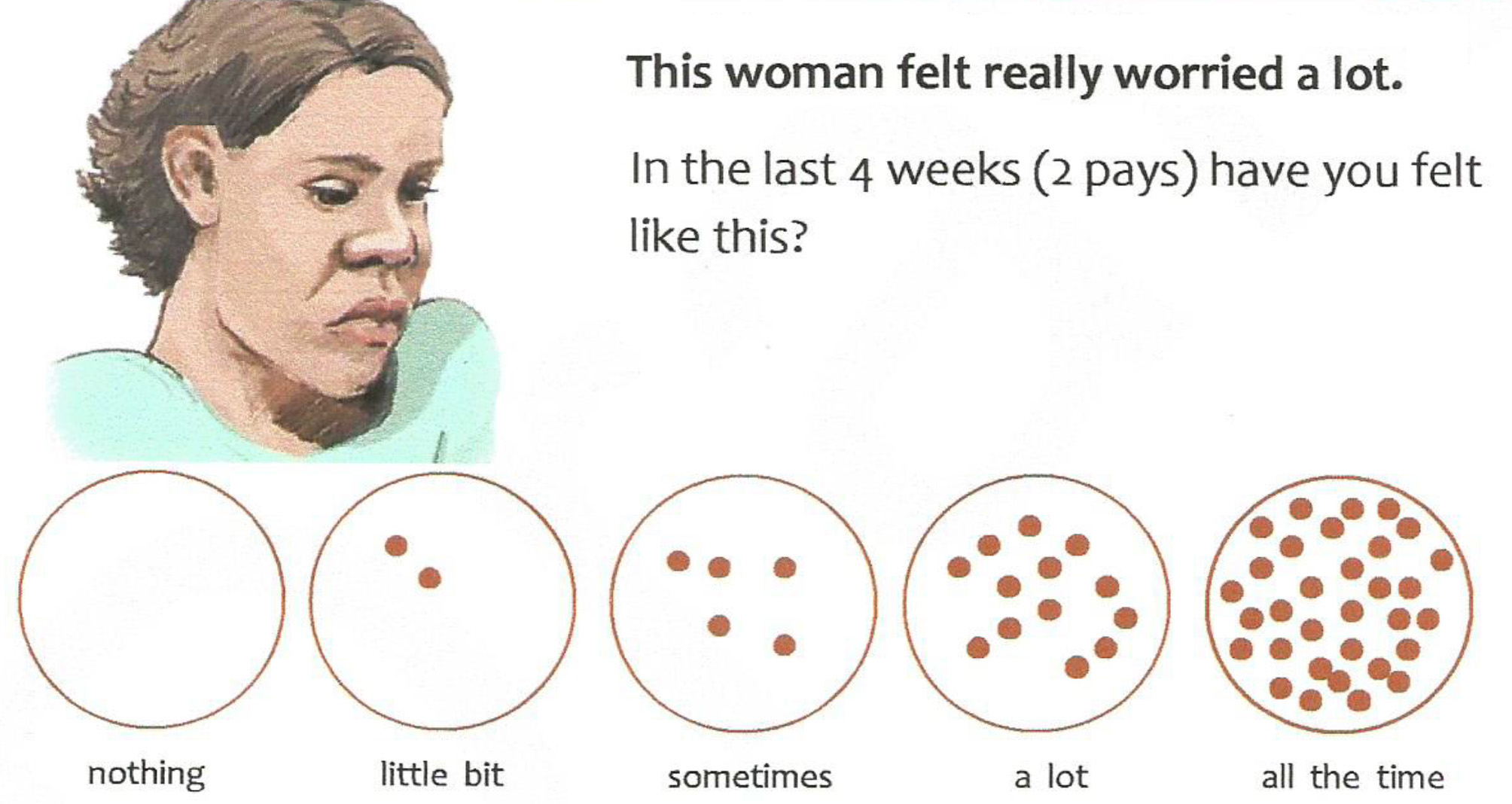
From I- SPI- Kessler 5 (The Indigenous Story and Picture based Kessler 5 Howard 2010 from https://zenodo.org/record/8325128)
Visual schedules
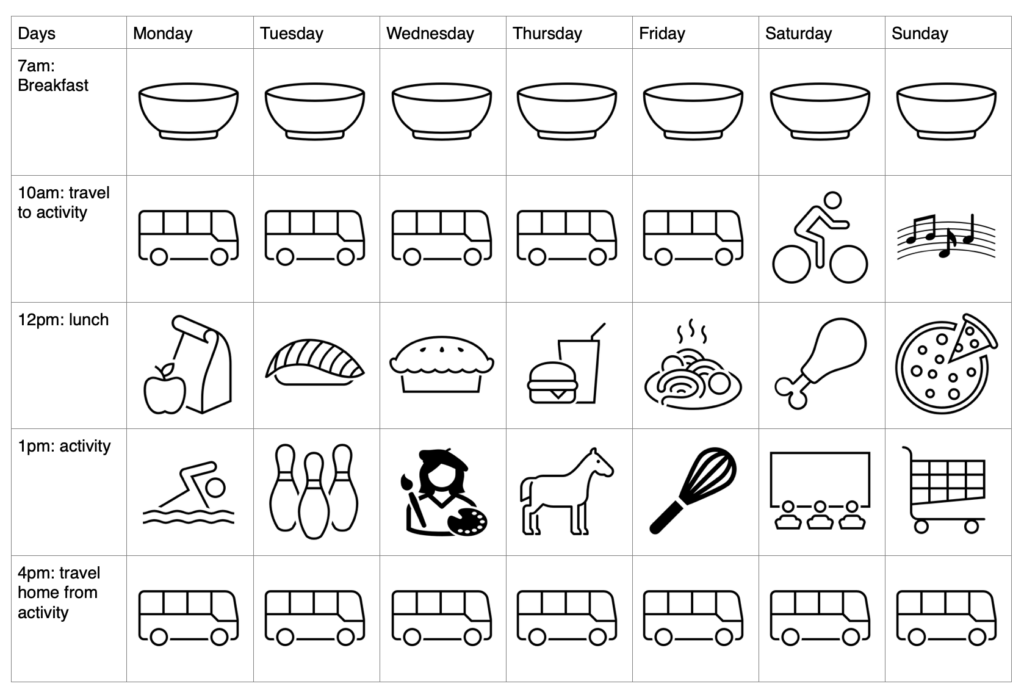
Similar to visual aides, they can be created using lots of different visual materials, depending on individual preferences and ways of communicating. When creating visual schedules, it is important that they include a clear beginning, middle and end.
Social stories
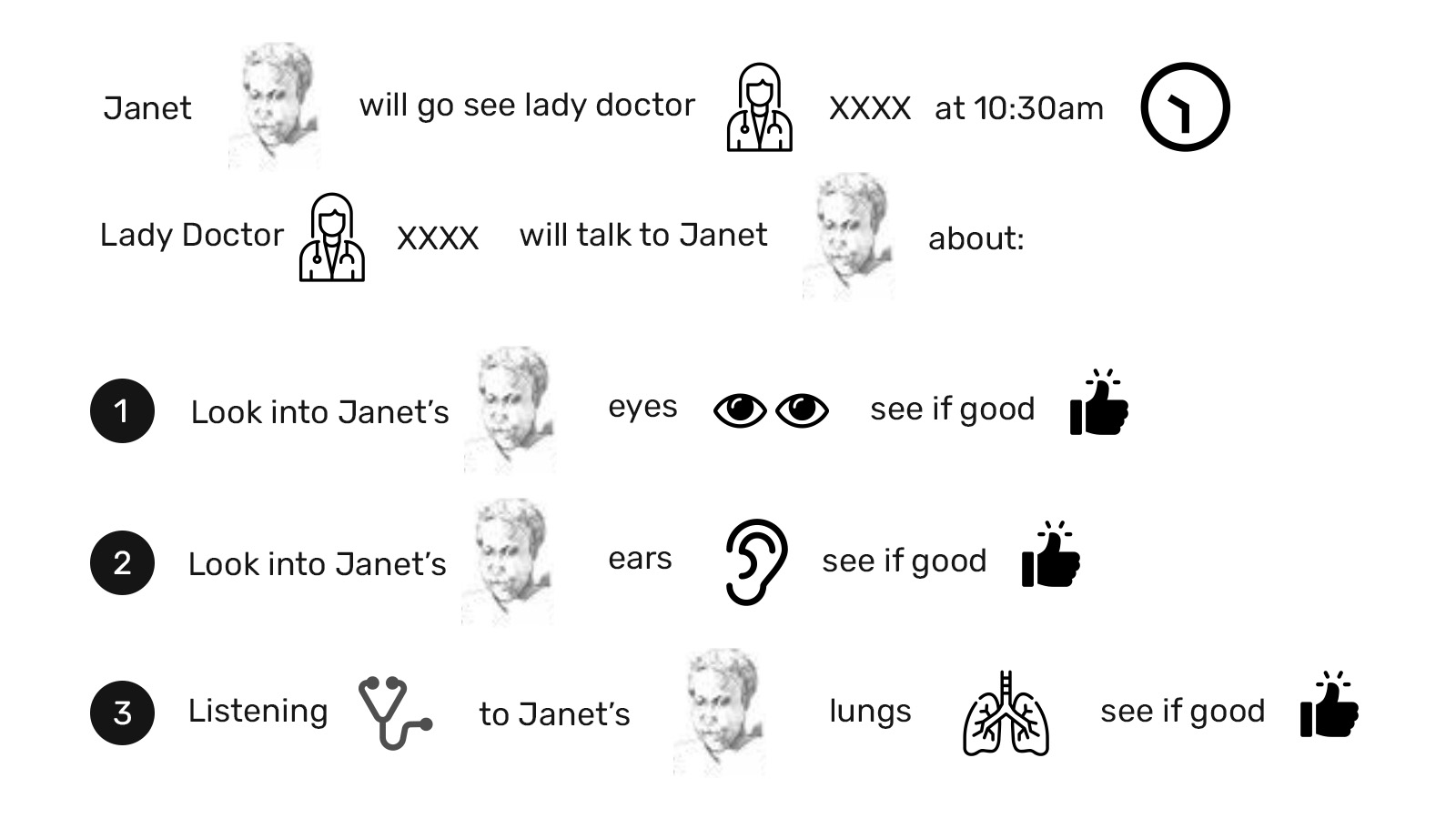
Social stories are short booklets of images (e.g. photos, illustrations) and simplified text that can be used to explain a new activity or social situation to an individual.
Social stories can help people understand key information about what to expect in this new activity or social situation, such as where it is, who will be there, what will happen, why it is happening. They can also help people learn about social behaviours that might be expected in certain settings, such as going to the supermarket, doctor, or community event.
Social Stories
Reduce anxiety by preparing person using highly visual communication
Once you are happy that you have understood this Topic - please select "Mark Complete" above.
To complete the Bina Gurri Yarns Course you must "Complete" all Topics.